




Project insight

Wunderline

Cross-border rail link Groningen–Bremen, with the cross-border service commissioned in 2026. An infrastructure project in the field of railway control and safety technology (signalling) in which our managing director Edoé Lassey was personally involved.

Newly laid track on the Friesenbrücke over the Ems, with the blue steel truss superstructure behind Railway · signalling

The project at a glance

The Wunderline closes a gap in the European rail network between the north of the Netherlands and northern Germany. Over 173 kilometres, around 124 of them on German territory, a continuous link is being created from Groningen via Leer to Bremen.

  • RouteGroningen via Leer to Bremen, cross-border between the Netherlands and Germany.
  • Scope173 kilometres of line in total, around 124 kilometres of them on German territory.
  • ConnectionRailway control and safety technology (signalling); our managing director was personally involved in the project.
  • CommissioningStart of cross-border train service in 2026.
On site

The Friesenbrücke over the Ems

Footage from the construction site: the new Friesenbrücke near Weener, at 335 metres with a movable centre section the largest hub-turning railway bridge in Europe and the central crossing of the Wunderline.

Track passage across the new Friesenbrücke with its steel truss superstructure.

Why the Wunderline is being built

An attractive rail link between Bremen and Groningen has been missing for years. The Wunderline closes that gap: instead of changing trains and relying on bus replacements, through direct trains are to run again and the journey time is to fall to around two and a half hours.

The whole cross-border region benefits, from East Frisia and the Emsland to the Dutch province of Groningen, from commuters and students to tourism and business.
Background: the Friesenbrücke

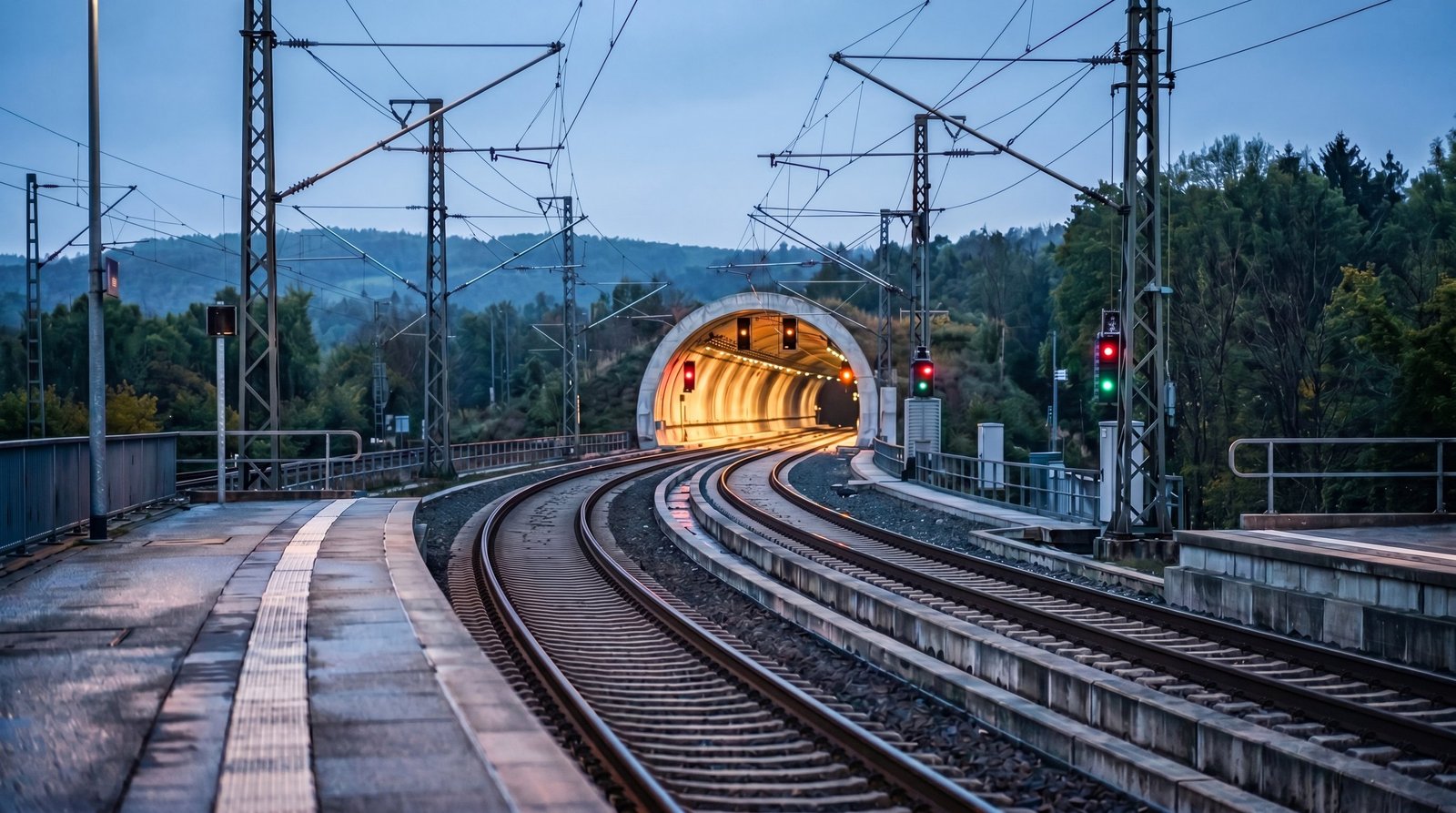
The trigger for the project is the Friesenbrücke across the Ems. In 2015 a cargo ship rammed the structure and made it impassable; since then there has been only a bus replacement service between Leer and Weener and no through train service.

Rebuilding it as a modern movable railway bridge is the heart of the Wunderline and the precondition for cross-border trains to run again from Leer all the way to Groningen.

Control and safety technology in railway construction

For a project of this scale, construction supervision of the control and safety technology (signalling, LST) is a key discipline: it ensures the proper execution of the signalling installations, checks them against the planning, the rulebook (VV BAU-STE) and the permit, and provides the verifiable documentation as the basis for commissioning.

Our managing director Edoé Lassey was personally involved in the Wunderline and brings this experience to the work of LND Ingenieure.

The technical challenge

At the heart of the signalling work is connecting the existing interlocking technology around Papenburg to the new electronic interlocking in Ihrhove. Migrations under live operation are among the most demanding tasks in railway construction: every switching state and every interface must be planned, checked and implemented safely.

European significance and funding

The Wunderline is more than a regional link: it is a building block in the European corridor from Amsterdam via Bremen and Hamburg to Scandinavia, shifting traffic from road to climate-friendly rail.

The project is co-financed under the INTERREG Germany–Netherlands programme with funds from the European Regional Development Fund (ERDF) as well as by the provinces of Drenthe, Friesland and Groningen and the Land of Lower Saxony.

More in this area
Your project

Are you planning a railway project with a signalling focus?